
by
Tyler Archibald & Ryan Windley
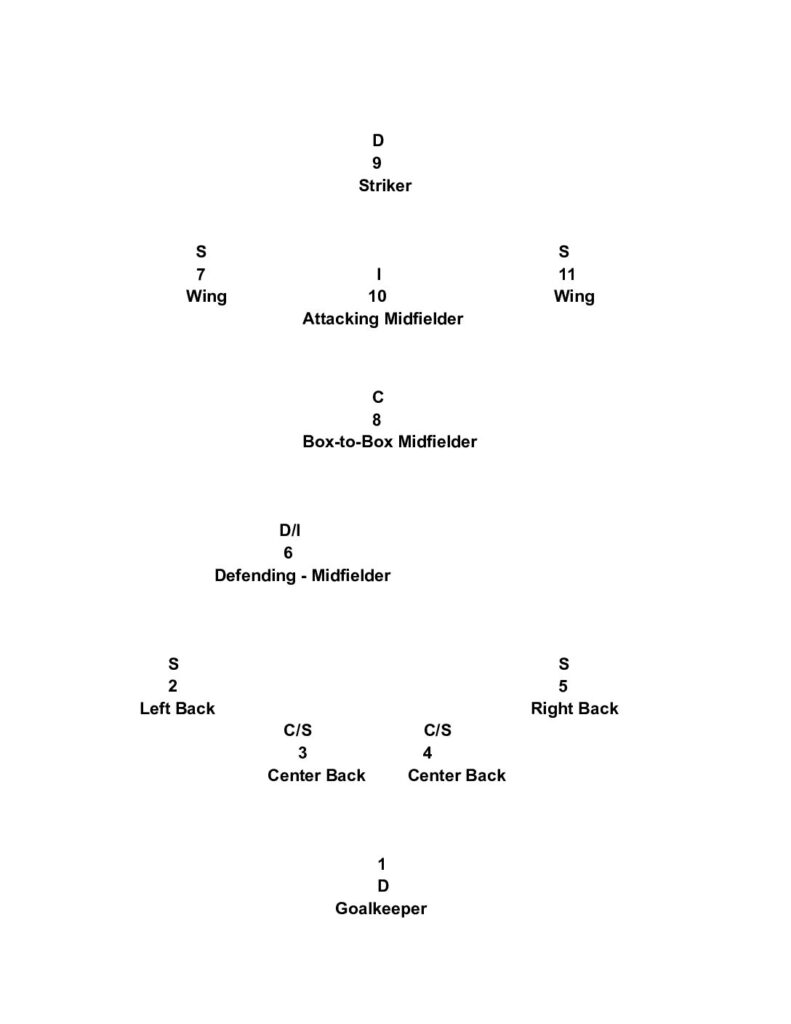
Each field position of a soccer formation has a unique set of responsibilities. In order for a team to have success on the pitch, each player’s personality must embody the requirements of the position played.
Using the DISC personality style model as a framework, a coach can match a player’s personality to the requirements and demands of each field position and dramatically increase both player satisfaction and team success.
*Please note. Just as in everyday life every personality style can bring success to any job, every behavioral type can bring success to each position on the pitch. Just because a “D” wants to lead the team doesn’t mean he/she will be a good leader. Maybe the “S” player through listening can make each player feel supported and valued allowing an esprit de corps that lifts the entire team. Certainly the “S” leader will have to take a page from the “D” playbook and learn when to push teammates harder in certain circumstances. However, we all know examples of silent, supportive leaders who don’t raise their voices and get emotional, who are able to achieve extraordinary results.
D-Dominant/Driver
“D’s” want to dominate a situation. They drive teammates hard and demand a lot of both their teammates as well as themselves. Players with high “D” scores naturally have nerves of steel. “D’s” killer instinct gives them an extreme sense of confidence and feel they can carry the entire team on their own shoulders
On a soccer pitch “D’s” are genetically wired for two positions… striker or keeper. Both of these positions require nerves of steel and the ability to face down foes. “D’s” don’t necessarily love being in the spotlight, as much as they enjoy controlling the game and feeling that they are singularly triumphing over their foes, both of which get them into the spotlight. “D’s” are task focused and have the ability to intensely focus on the task at hand. Once the D has their prey in sight, they become singularly focused and can get tunnel vision, forgetting the positions of their fellow teammates and the opposing side.
I – Influence/Inspirational
“I’s” want to influence others and look good doing it. “I’s” crave recognition and popularity. “I’s” are valuable in a game because they have the ability to influence other players by bringing enthusiasm to the team. “I’s” also enjoy being creative and coming up with creative solutions to problems. After a shot has been blocked, “I’s” are good at creating plays and getting the ball back to the striker for another opportunity.
Because “D’s” and “I’s” are both by default action-oriented, they work well as attacking midfielders because they have to take the initiative to make opportunities happen.
S-Steady/Supportive
“S’s” love to support their fellow players. As opposed to “D’s” and “I’s”, “S’s” do not want or feel the need to be in the spotlight. They are very happy playing a supporting role in helping the team win. Because of their steadiness, “S’s” are even-tempered and don’t get emotionally high and therefore don’t get emotionally low either. “S’s” are very dependable and pride themselves on their reliability. “S’s” have the uncanny ability to find the straightest line between two points. If there is an easier way to complete a task, the S will find it.
C – Cautious/Competent
A high “C” player is organized and loves detail. They analyze obstacles and then work systematically to overcome the obstacles they have identified. “C’s” love data and logical decision making. “C’s” will analyze data they see in real time on the pitch and then construct mental models of the field, players, and evaluate possible scenarios that may play out. “C’s” hold themselves to a high level of logical rigor in their decision making process. They recognize and respect logic and competence when they see it in others.
Both “S” and “C” are thinking oriented. They need time to process, analyze and then react to a situation. S and “C’s” need to have time to think before acting. They typically do this best in the mid or backfield position.
DISC in professional futbol
In order to help illustrate the types of play we’re discussing, let’s examine the gameplay of professional players who have achieved superstar status. I don’t know if these players have ever taken the DISC assessment. If assessed, their individual results may not even match the DISC styles I’m attributing to them, but by viewing each player’s gameplay through the DISC lens, we’re able to illustrate our point.
D-Dominant/Driver
An example of a player with a “D” style of play would be Zlatlan Ibrahimivic. Known for being highly competitive and his aggressive style of play, Ibrahimivic is regarded as one of the best strikers of all time. Ibrahimivic’s nerves of steel give him the composure and myopic vision to charge multiple defenders at once and come out of the scrape with a goal. Zlatlan Ibrahimovic’s aggression has given him a reputation for being a rebel on and off the pitch.
I – Influence/Inspirational
Cristiano Ronaldo’s play is archetypal Influencer.
Cristiano Ronaldo is a great example of flexibility. Ronaldo’s style of play has changed multiple times over his career. This type of flexibility is something Influencers typically find easy to do. Ronaldo has become increasingly good at being versatile with both his left foot as well as his right foot. Cristiano Ronaldo is known for playing with a sense of flair by using a repertoire of dribbling tricks and feints, in particular his trademark “chop.” Ronaldo is a master showman and is all about looking good. These are both quintessential “I” behaviors.
S-Steady/Supportive
Widely accepted as one of the best dribblers in the world, Lionel Messi’s ball skills are 2nd to none. Messi looks for ways to support and help create plays for his fellow teammates. Anyone who remembers his time at Barcelona will recall the plays he made with former players Iniesta and Xavi.
Messi is known as a hardworking, team player and also known for his humility… a virtue not widely found in professional futbol players. Hardworking, team player, and humble are all certainly traits found in an “S.”
C – Cautious/Competent
Jordan Henderson personifies the characteristics of a player with high “C.” He has a tactical intelligence for the game that most players don’t possess. This ability allows Henderson to have situational awareness by reading the position of the players on the field and understanding what will unfold next and how to position himself to take advantage of it. Jordan not only can read the layout of the players of the field, but also has the uncanny ability to read the individual players charging at him. When confronted with a challenge, Henderson will not only consistently win, but then will transition the ball downfield for the set-up for goal.. Jordan Henderson’s tactical understanding of the game and how to take advantage of it make Jordan a player known for his consistency. Consistency and logical thinking are the hallmarks of a player with high “C” behaviors.

The 4-4-2 and the DISC
Our thesis is that applying the DISC model will help coaches and players alike get more satisfaction and better overall team success by playing each player at the position they naturally feel best suited. —
Please remember most people don’t have only one personality style, but a conglomerate of two or three of the four personality styles. The study of personality and behavior is very complex. Human beings are complex. Humans under stress are even more complex.
What we call a personality style is really a behavior style. A style of hardwired predictable behavior patterns that — while predictable — are utilized uniquely by every person.
Remember that every player (no matter their personality style) will bring something positive as they play each field position. However, players will find the most success playing a position that matches their natural behavior patterns.
Successful players always play to their strengths, but always remember they are only as good as their weaknesses. This means as a player you should focus on what you do best, but remember your blindspot is what will get you into trouble.
Let’s start with the forward field positions.
Striker – D
The striker is a player with nerves of steel. The striker has a laser focus on the goal and putting the ball to the back of the net no matter what or who stands in her way. The “D” of the striker is what stokes her fire to win.
Wing – S
The wing’s job is to support the play by getting the ball back into position to score. “S” style players are excited by their support role. They are as proud to earn an assist, as with the resulting goal that was scored.
Attacking Midfielder – I
The word attack implies action. The attacking midfielder has to be action oriented, but creative in their play to open up opportunities for their fellow forward teammates. An I personality style are both suited for action. “I’s” are action oriented and love to use a creative approach in order to stand out amongst the team. We prefer the notion of having an I in this position as a “D” player may take it upon themselves to shoot the ball each touch without waiting for a better play to emerge.
Box-to-Box Midfielder – C
The Box-to-Box Midfielder’s ball handling skills have to be technically precise. In addition to having the best ball handling chops, this player must possess a tactician’s ability to analyze the action on the entire pitch and logically surmise where their skills can be best utilized at any time to best support the team. The depth of game knowledge, skill level, and stamina required of the B-2-B Midfielder isn’t just offense or defense, but both.
Defending Midfielder – D/I
The Defending Midfielder requires the mental and internal fortitude to face down an oncoming freight train of opposing players and break up their play to regain possession.
Left Back & Right Back – S
Just as the Wings act in a supportive role on the offensive side of the pitch, Left Backs and Right Backs support the defense in getting the ball away from the goal and on to a downfield team member. “S’s” do their best work in supportive roles and receive a sense of accomplishment from being supportive. However, it never hurts to remind the players in supportive roles how valuable they are to the success of the team.
Center Backs – C/S
The Center Back position can be filled with “C’s” or “S’s”. “C’s” are preferable because of their skills in analyzing and logically thinking through oncoming attacks. Once a “C” has analyzed the opposing players and because they are so task-oriented, they have the ability of being an immovable, difficult obstacle to overcome on the way to the goal.
Goalkeeper – D
What makes an excellent goalkeeper? Extraordinary big hands? A large wingspan?
We suggest that the biggest trait of successful goalkeepers is nerve. A goalkeeper must have the inner fortitude to face down two tons of charging, snorting rhinoceros on the plains of the Serhengetti and not lose their nerve. “D’s” have the ability to face these challenges and come out victorious because their need for dominance is wrapped up in their identity. A “D” would rather die than face the humiliation of someone getting the better of him.
Goalkeepers have the immense pressure of standing alone, in the box during end-of-game penalty kicks knowing that everything rides on her. “D’s” love this challenge and pressure because it gives them a chance to show everyone (including themselves) what they are made of.
Default Aggressive vs. Default Team
Former Navy Seal Jocko Willink talks about the need to be “default aggressive.” When it comes to the DISC model, the “I-S-C” players should be encouraged to “default aggressive.” However, an already extremely aggressive “D” may need to rein-in their “D” to become “default team.” A showboating “I” may also need to think “default team” before thinking default me. “Default team” is thinking about the good of the team before thinking about yourself.
An example of “default team” mentality could be after a questionable call is made by the ref instead of getting in his face and risking expulsion, the “D” takes a deep breath, shakes his head, and walks the other way. This keeps the team’s striker on the pitch and ready to score the game-winning goal, instead of watching helplessly from the sidelines.
Young players need to understand their personality style because it develops a better sense of who they are and in turn, increases self-confidence. The more self-confident the player, the more successful the player. As a coach, understanding your players’ personality styles better helps you know where to place them on the field for both the success of the player and the overall success of the team.