
Inverting The Pyramid The History of Football Tactics by Jonathan Wilson. This review’s first half discusses soccer’s humble beginnings and interesting historical facts. The second half discusses soccer managers who were innovative, making soccer the universally loved sport it is today. Connections to these managers’ philosophies and the similarities to the Spirit of Excellence and SPoX Coaching program are highlighted.
Soccer’s Macho Beginnings
In the early days, before there were the official sports of football or soccer there was a game whose rules were yet to be codified. Although the rules weren’t 100% universally understood, what was understood is that there was very much a macho aspect to the game.
Before soccer shin guards became part of every player’s kit there was something called “hacking” which is when a player would kick an opponent repeatedly in the shins until they relented and gave up the ball. When a player would receive the ball, he would make a mad dash, dribbling down field, charging the goalkeeper. No attempt to pass was made because apparently this act made you to be “less of a man” in the eyes of your fellow players. Interestingly, it was the Scots who first introduced the idea of passing the ball to a fellow teammate.
This early soccer predecessor started in English colleges and was very popular among students. However, the game was played differently at different universities. At Eton, the game was played by kicking the ball down the field, while in Rugby, a college town in the West Midlands area of England, the ball was carried and ran down the field towards the goal.
Football or what would be called Association Football (Soccer) and Rugby officially split in 1863. Later Rugby split again into Rugby Union and Rugby League. American Football has its roots in Rugby as well. In order to score a goal in Rugby, the player has to cross the goal line or “try line” and literally touch the ball down onto the grass – hence the American Football term “touch down.” Just as in Rugby, during the early days of American Football it was illegal to throw the ball forward to a teammate, completing a forward pass.
As school boys quickly matured into employees of the 19th century Victorian industrial age, the game soon spread to industry and the working class.
British colonialism spread the game throughout the British realm and even to countries who weren’t part of the realm, thanks to British industrial concerns such as mining, banking, and engineering. The local populace in places like Argentina, Austria, and Brazil were introduced to the game through British company teams.
True to rigid English notions about socio-economic hierarchy, the company teams were very stratified along economic and racial lines. Ethnic locals weren’t allowed to play on the English teams, but they soon started their own teams and each country developed their own style of play.
It is clear that the innovative technique of the bicycle kick was used over 100 years ago, but who invented it isn’t quite as clear. Some say it was the Argentines, others say it was the Brazilians, and still others say it was a Chileano who pioneered the technique. However, what is extremely clear and accepted is that it wasn’t the English who invented it. Inverting the Pyramid, page 50
If the English invented the game, why weren’t the English the ones to innovate it? It took players from nations who weren’t concerned with conventionality and conforming to certain norms to think up new and innovative ways to play the game and to play it more efficiently.
The author goes through a myriad of players and coaches in order to trace the history of on-pitch formations and tactics through many different countries and three different centuries of soccer play. The book starts with the very beginnings of soccer up to the modern players and coaches with whom we are all familiar. The author discusses the pantheon of professional soccer gods who are recognized by the use of only one name: Cruyff, Guardiola, Klopp, Pele, Neymar, Messi, and Ronaldo.
The author traces the lineage of our modern day soccer heroes to their predecessors whose philosophies still affect soccer play today.
In between history lessons and endless discussions of coach tactical player formations, is something that I found extremely valuable and something that helped reinforce the philosophy of the Spirit of Excellence.
I’ll share some examples of historical philosophies that are the basis of the Spirit of Excellence and SPoX Coaching.
The author, Jonathan Wilson, spends quite a bit of time detailing and analyzing the management styles and philosophies of Cesar Luis Menotti, Rinus Michaels, Viktor Maslov, Valiery Lobanovskyi, Arriga Sacchi, and Jorge Valdano. He cites Viktor Maslov, Michels, Lobanovskyi, and Sacchi for their tactical prowess that led to their coaching success while showcasing Menotti and Valdano for their philosophical attitudes which led to their coaching success. Viktor Maslov gets recognition for being an innovative tactician and coach who could reach his players emotionally and inspire them to greatness.
Jonathan Wilson credits Michaels and Lobanovskyi for pioneering the modern version of Total Football where players are expected to know every position and to not just specialize in one position. He recognizes Sacchi for implementing Total Football successfully with his teams. He hails all three coaches for their modernity or a word more used by Americans would be innovation.
In particular, I’d like to highlight the philosophies of Menotti, Maslov, Lobanovsky and Sacchi because they encapsulate the philosophy of the Spirit of Excellence.
Cesar Luis Menotti
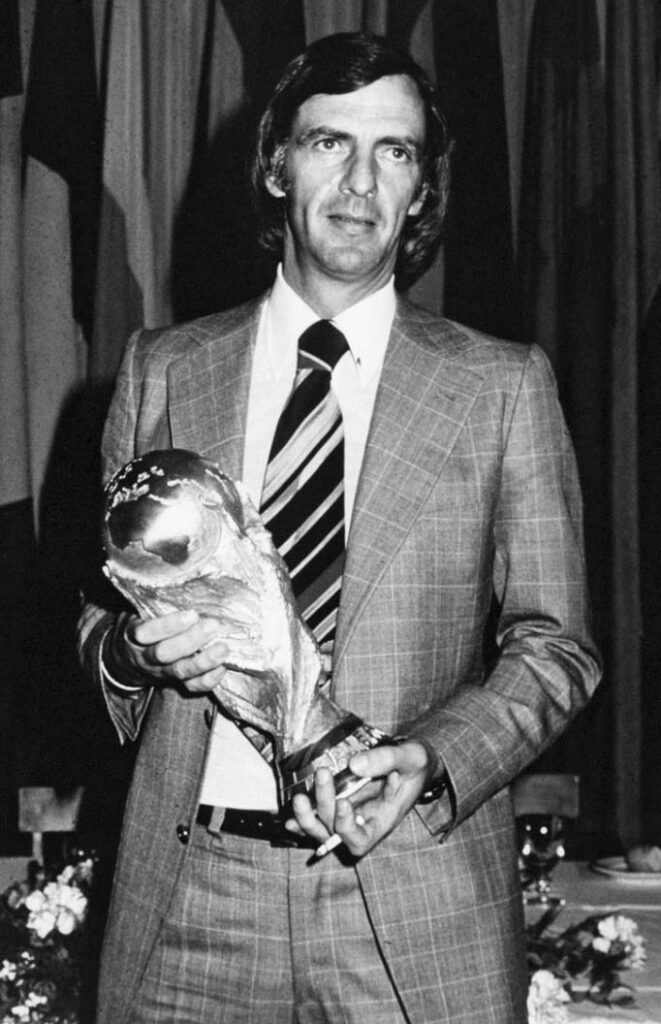
Cesar Luis Menotti was a successful Argentine manager who was known for his long hair, Bohemian lifestyle, and pragmatic philosophies. Menotti: And for those who say that winning is the only thing, I want to warn them that someone always wins. Therefore, in a 30 team championship, there are 29 who must ask themselves, What did I leave at this club? What did I bring to my players? What possibility of growth did I leave to my footballers?
Inverting the Pyramid chapter 18.
This is very much the Spirit of Excellence. You always play to win, but remember that losing a soccer match is also a part of winning, just as winning is a part of winning a soccer match. The fact that Wilson uses Menotti’s quote shows that while one coach may be boasting, “This year I brought a title and a trophy to this club.” Wilson shows Menotti’s ability to make managers look inward. Menotti takes the opportunity to give managers a chance to reflect on their jobs.
These are the questions a coach who espouses the Spirit of Excellence philosophy would ask:
How have I made this club better?
What of myself did I share with my players?
In what ways have I given my players opportunities for growth not only in their soccer skills, but also growth as a person?
Viktor Maslov
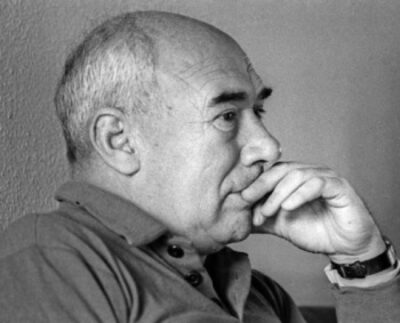
Maslov may well be considered one of the fathers of modern football in terms of tactics and . As he made human connections to his players and they viewed him as inspiring.
Inverting the Pyramid, page 18
His pre-match instructions lasted no more than five minutes… but he was always precise in telling us how to counteract their strengths. He would always finish with an aphorism to touch our hearts: “Today you must be strong like lions, fast like stags, agile like panthers!” And we would always do our best.
Inverting the Pyramid, page 182
Consultation was a key part of the Maslov method. The evening before games he would gather his squad together — or the senior players at least — to talk through the next day’s match, canvassing their thoughts before drawing up his final game plan. It was that level of trust and mutual understanding that allowed Maslov to implement his more radical tactical innovations. And they were radical, almost incomprehensibly so in the context of the times.
Inverting the Pyramid, page 183
As a coach, taking the time and effort to build relationships with your team members and to offer some inspirational words goes a long way to build players’ trust in their coach. Building trust in a coach, in turn, allows players to build trust in each other, and will allow a team to achieve success.
The radical tactical soccer innovations of Viktor Maslov:
– When the rest of the world was using the WM and 4-2-4 formations, Maslov invented the 4-4-2.
– After watching the Brazilian team’s success, he pulled back his forward. He then went the extra step and pulled back the right winger too.
– Maslov withdrew his wingers in such a way that it did not impinge upon his sides creative capacity.
Inverting the Pyramid, page 184
Valeriy Lobanovskyi
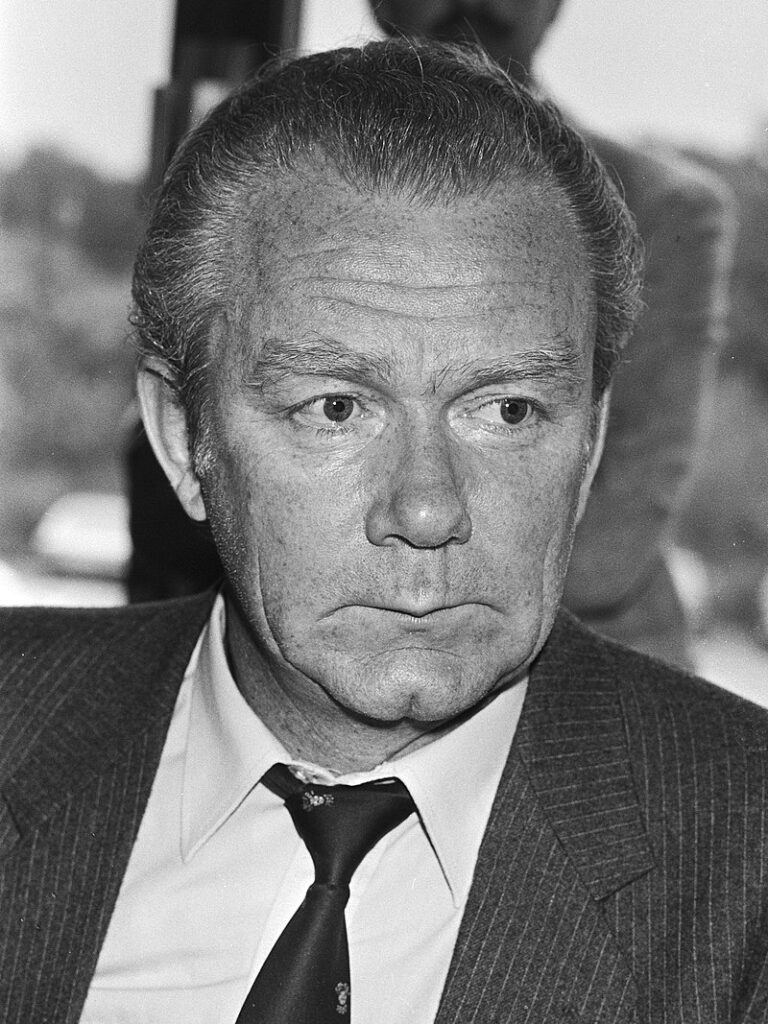
Valeriy Lobanovskyi grew up in Ukraine and was trained as a scientist. He was the first to come to the game with a scientific mind and approach.
In him was acted out the great struggle between individuality and system: the player in him wanted to dribble, to invent tricks, and to embarrass opponents, and yet, as he later admitted, his training at the Polytechnic Institute drove him to a systematic approach, to break down soccer into its component tasks. Soccer, he explained, eventually became a system of twenty-two elements — two subsystems of eleven elements — moving within a defined area (the field) and subject to a series of restrictions (the laws of the game). If the two subsystems were equal, the outcome would become a draw. If one was stronger, it would win. Inverting the Pyramid, page 262
The efficiency of the subsystem is greater than the sum of the efficiencies of the elements that compose it.
Inverting the Pyramid, page 263
What Lobanovskyi is describing here is what will later become known as synergy. The Spirit of Excellence Coaching program recognizes the synergy created by individuals as they come together to create a soccer team and the unexpected success synergy can create.
Soccer, he concluded, was less about individuals than about coalitions and the connections among them. “All life,” as he later said, “is a number.” Inverting the Pyramid, page 262
The above passages exemplify Lobanovskyi as the true scientist he was..
It is interesting that when an idea’s time has come, people in desperate places start thinking about how to implement it. At about the same time Rinus Michels was conceiving Total Football Lobanovskyi was working with the idea of all players pressing
Although Lobanovskyi brought the scientific method to soccer, he also understood humans and human emotion. An interesting quote is provided on his Wikipedia page..
Arriga Sacchi
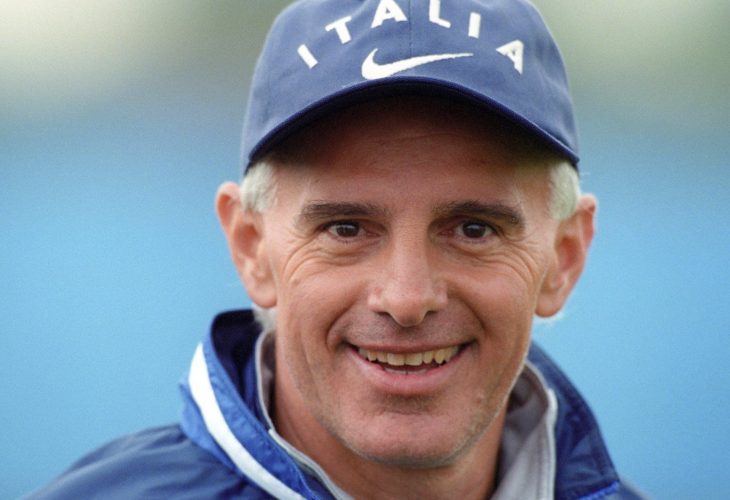
Sacchi was known for his strict training regime and practice. He wanted his players to understand the importance of self-discipline.
A disciple of Valeriy Lobanovskyi and Rinus Michels, Sacchi believed in every soccer player understanding every role and action required of every player on the pitch.
He (Sacchi) wanted to see not merely the man on the ball, not merely what most would consider the center of the action, but also the rest of the team; he approached the conclusion Valeriy Lobanovskyi had come to, that the man out of possession is just as important as the man with possession, that soccer is not about eleven individuals but about the dynamic system made up of those individuals. Inverting the Pyramid, page 357.
The Spirit of Excellence starts with the recognition that every player has unique abilities and how each player’s individual contribution fits into the greater system that makes team success. The irony is that as a player seeks to contribute her personal talents and individuality, she must sacrifice what is best for herself, giving deference to what is best for the team. This is where many would-be great players lose sight of the mission and don’t achieve the greatness they could have if they had only put the team’s success above their own.
Sacchi believed in the importance of emotion to the game of soccer. The emotions not just of athletes, but of the fans.
I wanted to give 90 minutes of joy to people. And I wanted that joy to come not from winning, but from being entertained, from witnessing something special… A good manager is both screenwriter and director. The team has to reflect him. Inverting the Pyramid, page 358.
Josef Lenhart, father of the Spirit of Excellence, knows the importance of emotion and its role in sport. So much so that his company Sporteo International’s tagline is “Winning Emotions.” Josef believes passion, team spirit, and striving for personal excellence all are part of creating Winning Emotions within a soccer team, a business, a family, or any organization where people depend on each other to achieve success.
Winning Emotions are also conveyed to the fans both in the stadium and at home. Feeling emotions is the reason people bother to watch the game at all.
Jonathan Wilson cites retired Argentine professional soccer player and former Real Madrid manager Jorge Valdano, stating:
At the heart of football’s great power of seduction is that there are certain sensations that are eternal. What a fan feels today thinking about the game is at the heart of what fans felt fifty or eighty years ago.
Inverting the Pyramid, page 358
Although soccer play has evolved, the emotions connected to it are age-old — the exhilarating excitement of winning — the heart-crushing feeling of defeat, love for some players, and the hate of others are as old as sport itself.
In Inverting the Pyramid The History of Football Tactics Jonathan Wilson does an incredible job of researching players and managers to give us an understanding of their history, psychology, and how those led to their soccer success. The Spirit of Excellence provides the perfect framework to help explain what made these players and managers achieve incredible soccer success and how you can emulate their qualities to find your own success.